

As industries worldwide accelerate their transition towards lower emissions, the environmental impact of materials is receiving increasing attention. The carbon footprint of aluminium, from primary production to processing, has therefore become an important consideration for manufacturers and supply chains. With its exceptional recyclability and efficiency in material use, aluminium is increasingly recognised as a key material for the development of a low-carbon industry.
Low-Carbon Aluminium: A New Standard for Sustainable Industry
As industries worldwide move towards lower emissions and more sustainable production, the carbon footprint of materials is becoming an increasingly important factor in procurement and product development.
In this context, aluminium is gaining a new strategic role. Thanks to its recyclability, durability and lightweight properties, low-carbon aluminium is becoming an essential material for industries striving to reduce emissions and build more sustainable value chains.
What Is Low-Carbon Aluminium?
Low-carbon aluminium refers to aluminium produced with a lower carbon footprint compared to the industry average. The carbon footprint of aluminium is generated across the entire production chain – from primary aluminium production to the processing of semi-finished products.
The largest share of emissions typically occurs during the production of primary aluminium, where electrolysis processes require significant amounts of electricity. For this reason, the energy source used in aluminium production plays a decisive role in determining the overall carbon footprint.
Another important factor in reducing emissions is the use of recycled aluminium, which significantly lowers energy consumption and environmental impact.
Recycling aluminium is highly energy-efficient. Re-melting aluminium requires up to 95% less energy than producing primary aluminium from bauxite ore. This unique property makes aluminium one of the most suitable materials for the circular economy.
Why Low-Carbon Aluminium Is Becoming Essential for Industry
Climate policies and regulation
Across Europe and globally, climate policies are accelerating the transition towards lower-emission industrial production. Initiatives such as the European Green Deal aim to significantly reduce greenhouse gas emissions.
In addition, the Carbon Border Adjustment Mechanism (CBAM) is gradually introducing carbon footprint considerations into international trade, encouraging companies to source materials with lower embedded emissions.
Increasing customer requirements
Industries such as automotive, construction and packaging are placing greater emphasis on the environmental impact of the materials they use. As a result, suppliers are increasingly expected to provide:
-
verified CO₂ emission data
-
material traceability
-
a higher share of recycled raw materials
Competitive advantage in global markets
Companies that can supply low-carbon aluminium products and provide transparent emissions data are gaining a competitive advantage in global supply chains, where sustainability is becoming a key purchasing criterion.
Aluminium Recycling: A Key Enabler of the Circular Economy
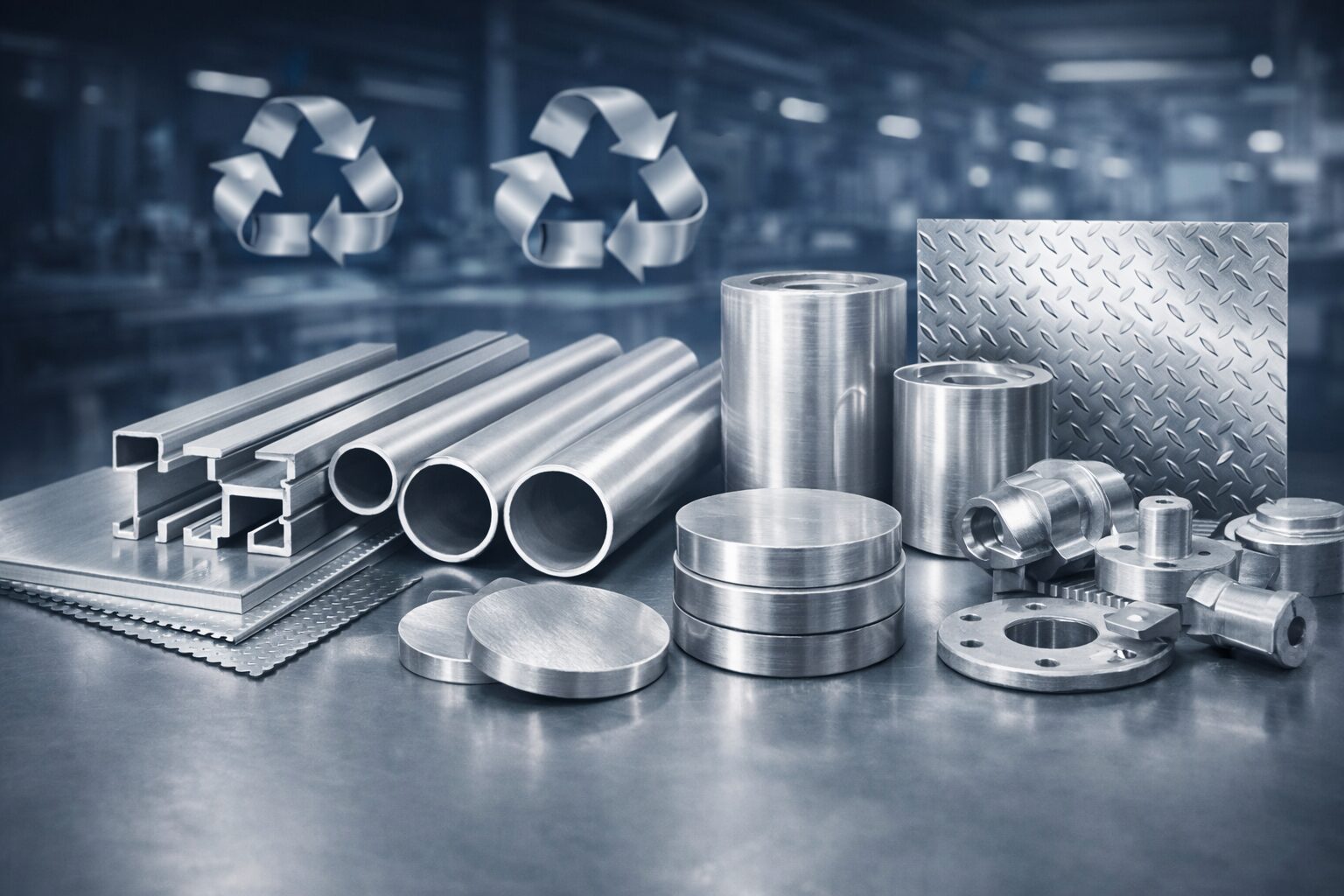
One of aluminium’s most important characteristics is its nearly unlimited recyclability. Unlike many other materials, aluminium can be recycled repeatedly without losing its mechanical or technological properties.
In practice, the circular economy of aluminium includes:
-
collecting aluminium scrap
-
re-melting and refining the material
-
reusing recycled aluminium in new products
This process significantly reduces energy consumption, lowers CO₂ emissions and decreases the need for primary raw materials. As a result, recycled aluminium plays a central role in the development of low-carbon aluminium solutions.
The Role of Aluminium Processors in Reducing Emissions
Aluminium processors also play an important role in reducing the overall carbon footprint of aluminium products. At this stage of the value chain, emissions can be reduced through improved efficiency, technological optimisation and responsible material sourcing.
Key approaches include:
-
improving the energy efficiency of production processes
-
optimising manufacturing technologies
-
increasing the use of recycled aluminium
-
monitoring and transparently reporting CO₂ emissions
Through these measures, aluminium processors contribute to more sustainable production and support their customers in achieving environmental targets.
Low-Carbon Aluminium at Impol: The InfiniAL Brand
At Impol, sustainability is an integral part of the company’s long-term development strategy. One of the tangible outcomes of this approach is the InfiniAL brand, based on the concept of low-carbon aluminium.
InfiniAL products combine high-quality aluminium semi-finished products with a reduced carbon footprint. This is achieved through the use of aluminium sourced from lower-emission production routes and a higher share of recycled material.
By offering InfiniAL products, Impol enables its partners to integrate materials that support their sustainability strategies and contribute to reducing emissions across the supply chain.
Thanks to aluminium’s exceptional recyclability, InfiniAL products combine technical performance with improved environmental performance.
These products are particularly relevant for industries where sustainability requirements are rapidly increasing, including:
-
the automotive industry
-
construction and building systems
-
the transport sector
-
the packaging industry
The Future of Aluminium in a Low-Carbon Economy
The transition towards a low-carbon economy will further strengthen the role of aluminium as a key material for sustainable industry.
Its unique combination of lightweight properties, durability and recyclability makes aluminium particularly suitable for applications where energy efficiency and emissions reduction are essential.
Key trends shaping the future of the aluminium industry include:
-
greater use of recycled aluminium
-
improvements in energy efficiency across production processes
-
increased transparency and reporting of material carbon footprints
The development of materials such as InfiniAL demonstrates how the aluminium industry is actively working to reduce emissions and support more sustainable industrial value chains.